In an era defined by aggressive decarbonization mandates and stringent ESG frameworks, battery technology has transitioned from a standard mechanical asset to a core strategic variable in Levelized Cost of Storage (LCOS) reduction.
Industrial procurement agents, infrastructure designers, and system integrators no longer evaluate batteries strictly on nominal capacity. The modern standard requires deep analysis of round-trip efficiency (RTE), thermodynamic stability under high-rate cyclic operations, and carbon footprint tracing across the product life cycle. Highly efficient batteries reduce energy dissipation, minimize active thermal management demands, and ensure consistent capacity retention over thousands of operational cycles.
This comprehensive technical white paper analyzes the leading global battery manufacturers and factories. By examining chemical compositions (from advanced LFP to next-generation sodium-ion systems) and evaluating factories on engineering quality, compliance, and energy footprint, this report establishes a standardized framework for complex battery procurement.
Established in 2021, Fujian SK Battery Co., Ltd. is strategically located in Fujian Province, the preeminent center of China’s new energy supply chain. Benefiting from convenient maritime and overland transportation networks alongside deep integration with local mineral refining and component manufacturing resources, the company delivers institutional-grade solutions on a global scale.
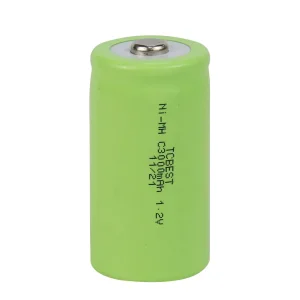
We specialize in Ni-MH batteries, Ni-Cd batteries, lithium iron phosphate (LiFePO4) batteries, ternary lithium batteries, and sodium-ion batteries. This comprehensive chemical portfolio allows us to supply optimized power configurations for emergency lighting systems, solar lighting installations, wireless telecommunications infrastructure, and smart home automation arrays.
With deep expertise in battery application scenarios, we focus on solving core problems customers encounter during usage, offering professional technical support and services, as well as customized battery solutions to help clients achieve higher efficiency and greater value. Our manufacturing facilities utilize advanced automated assembly lines and inline statistical process control (SPC) to minimize cell-to-cell variation, ensuring high dependability and a low total cost of ownership.
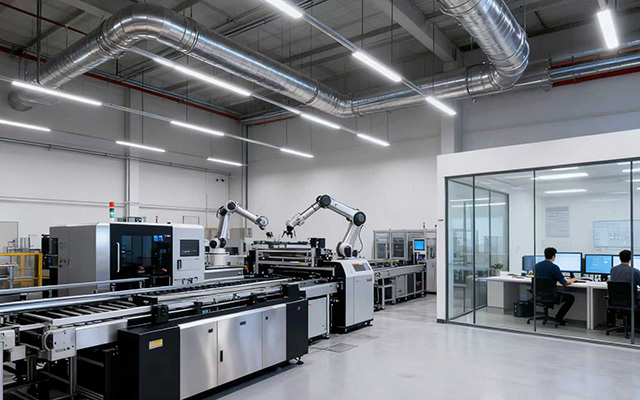
Evaluating factories based on automation level, cell design efficiency, thermodynamic performance, and raw material integration.
Country: China (Fujian Center)
Core Focus: Custom Industrial Packs (Ni-MH, Ni-Cd, LiFePO4, Sodium-ion).
Key Advantage: Highly customizable design parameters, low thermal signature cells, and direct vertical integration within the Fujian lithium and raw materials corridor.
Country: China
Core Focus: Ultra-large scale utility storage and EV power cells.
Key Advantage: Innovator of the "Qilin" Cell-to-Pack technology and leader in gigawatt-scale production efficiency, optimizing spatial volumetric densities.
Country: China
Core Focus: LFP "Blade Battery" cells.
Key Advantage: Extremely high thermal runaway resistance due to the structural blade form factor. The lack of standard modules maximizes pack volume and thermal efficiency.
Country: South Korea / global sites
Core Focus: High-nickel NCMA pouch cells.
Key Advantage: Outstanding power density and global distribution capacity, specializing in automated assembly lines and cleanroom manufacturing controls.
Country: Japan / USA
Core Focus: High-density cylindrical cells.
Key Advantage: Decades of precision electrochemical engineering. Panasonic leads in chemistry stability and minimizing internal resistance in small-format cylinders.
Country: South Korea
Core Focus: Prismatic PRiMX platform batteries.
Key Advantage: Exceptional structural resilience and cell safety systems, designed to operate in high-temperature industrial environments without swelling.
Country: South Korea
Core Focus: Ultra-fast charging pouch cells.
Key Advantage: Proprietary "Z-Folding" separator layout that eliminates cell shifting and dramatically lowers the risk of internal shorts under mechanical vibrations.
Country: Sweden
Core Focus: Low-carbon sustainable batteries.
Key Advantage: Utilizes 100% renewable hydroelectric power in manufacturing. Northvolt leads the industry in minimal cradle-to-gate carbon footprints.
Country: Japan / China / global
Core Focus: Extreme safety automotive and commercial packs.
Key Advantage: Achieved zero thermal runaway events across hundreds of thousands of active vehicle installations through rigorous manufacturing quality controls.
Country: USA / China / Germany
Core Focus: 4680 structural cylindrical cells and grid-scale Megapacks.
Key Advantage: Pioneers of dry electrode coating processes which remove organic solvent recovery steps from the factory floor, significantly cutting manufacturing energy usage.
The global battery industry is rapidly developing beyond traditional lithium-ion compositions. Manufacturers are investing in chemistry adjustments that balance energy density, cost, raw material availability, and safety. Three major trends define the current state of technology:
| Chemistry Type | Energy Density (Wh/kg) | Cycle Life (80% DoD) | RTE (Round-Trip) | Primary Application |
|---|---|---|---|---|
| Lithium Iron Phosphate (LiFePO4) | 140 - 180 | 4,000 - 8,000 | 92% - 96% | Solar ESS, Commercial & Industrial Backup |
| Ternary Lithium (NMC/NCA) | 200 - 300 | 1,500 - 3,000 | 95% - 98% | Electric Vehicles, High-power Electronics |
| Sodium-ion | 100 - 150 | 2,000 - 4,000 | 88% - 92% | Telecom Power, Microgrids, Cold Climates |
| Nickel-Metal Hydride (Ni-MH) | 60 - 120 | 500 - 1,500 | 70% - 80% | Emergency Lighting, Consumer Electronics |
| Nickel-Cadmium (Ni-Cd) | 40 - 80 | 1,000 - 2,000 | 65% - 75% | Heavy Industrial UPS, Aviation Backup |
Avg. Round-Trip Efficiency
LFP Cells Cycle Life
Thermal Runaway Incidents
Recycling Compliance
B2B procurement departments at the utility level evaluate battery suppliers through a complex compliance and safety lens. The transition toward global ESG accountability requires suppliers to provide verified technical documentation and adhere to strict safety standards:
Any battery module intended for international trade must possess certification under UN38.3 (lithium transport safety testing), IEC 62619 (safety requirements for industrial applications), and UL 1973. European imports must carry the CE mark and conform to the EU Battery Directive.
Under new EU rules, large energy storage projects must declare the total CO2 emissions of their batteries from raw material mining to assembly. Suppliers like Fujian SK Battery Co., Ltd. address this by optimizing factory energy usage and documenting supply chain pathways.
Hardware safety is only as good as the software monitoring it. A robust BMS must offer real-time monitoring of cell voltages, temperatures, and state-of-health (SoH), while featuring redundant physical contactors to disconnect packs during anomalies.
To maximize energy efficiency, battery cells must be integrated into customized systems tailored to specific industrial roles:
The next decade of energy storage development will focus on three key innovations designed to improve battery performance:
Solid-State Electrolytes: By replacing liquid electrolytes with solid-state alternatives, manufacturers aim to resolve thermal runaway issues. This shift enables the use of lithium metal anodes, raising energy density levels beyond 400 Wh/kg.
Silicon-Dominant Anodes: Replacing graphite anodes with silicon allows for much faster charging speeds and higher energy densities. Researchers are currently working to manage the volume expansion associated with silicon during charging cycles.
Closed-Loop Recycling: Future battery factories will function as manufacturing-recycling hybrids. The reclamation of battery-grade lithium, cobalt, and nickel directly from used cells will reduce reliance on virgin mining and insulate the supply chain from price volatility.
DoD directly impacts a battery's lifespan. Operating a battery at 80% DoD instead of 100% can extend its cycle life by 30% to 50%. This reduction in chemical stress lowers the wear on the active materials within the cell during cycling.
Ni-MH batteries offer higher energy density and are more environmentally friendly as they do not contain toxic cadmium. However, Ni-Cd batteries remain popular in specialized setups due to their excellent performance under high mechanical stress and reliable operation at low temperatures.
RTE measures the ratio of energy retrieved from a battery to the energy put in. Lower RTE values mean more energy is lost as heat. Over years of commercial operation, even a 2% drop in efficiency can lead to significant financial losses in wasted power.
All lithium batteries must pass UN38.3 testing to be legally shipped worldwide. This testing includes thermal, vibration, shock, and short-circuit evaluations. Large industrial batteries must also comply with Class 9 dangerous goods transport standards.
Sodium-ion batteries maintain superior capacity retention at sub-zero temperatures. While LFP batteries often require active heating to operate below 0°C, sodium-ion cells can deliver up to 80-85% of their nominal capacity at -20°C without risk of damage.
Yes. Manufacturers like Fujian SK Battery Co., Ltd. routinely engineer custom form factors, choosing cell configurations and BMS designs that match the electrical, mechanical, and thermal constraints of existing customer cabinets.
 SK Battery